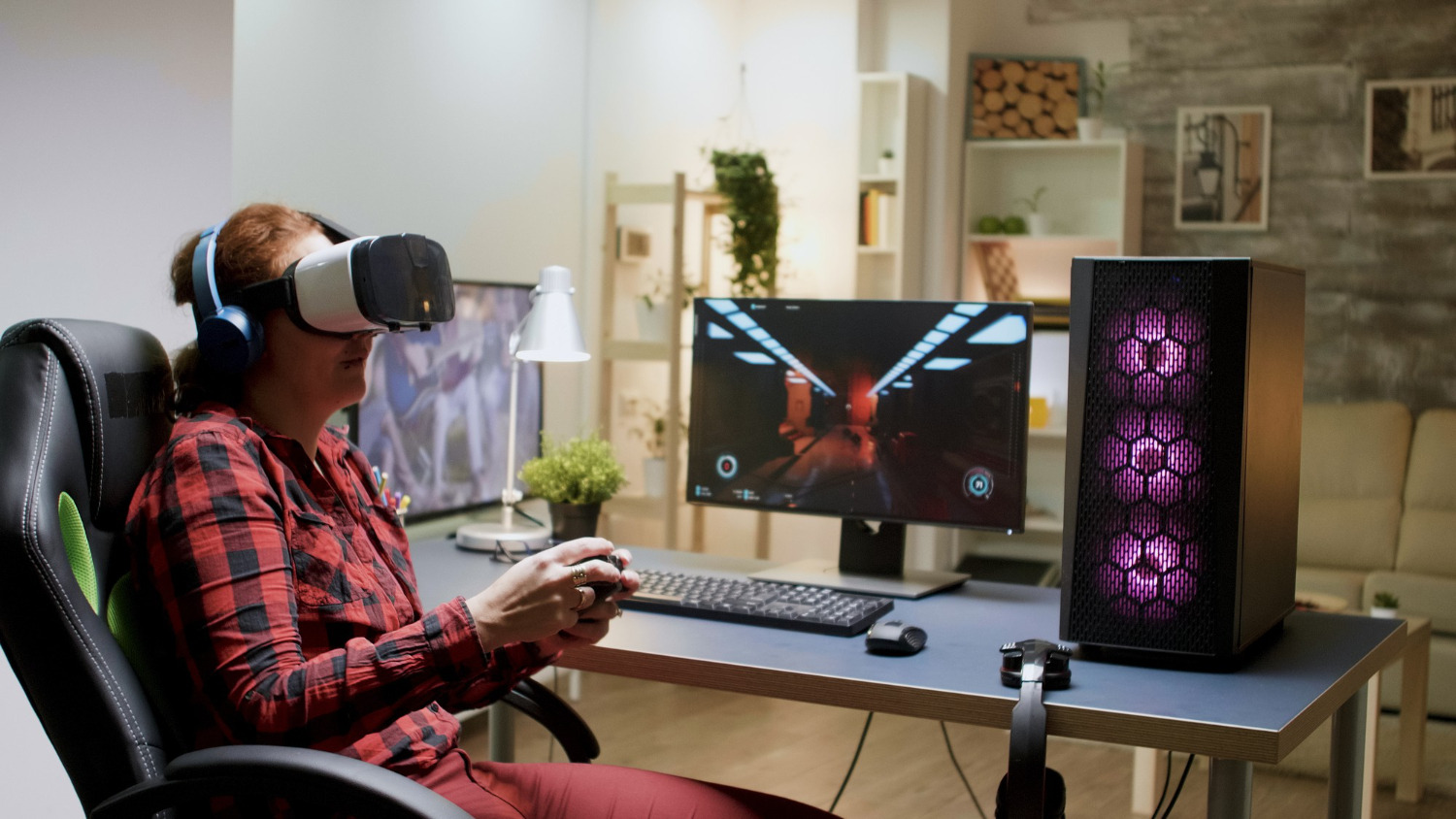
Constructing or purchasing your own first gaming computer may seem scary, with an abundance of components, specifications, and viewpoints on the internet. This beginner gaming PC guide is meant to make it easier and help you make smart and confident choices.
It does not matter whether you want to enjoy the game, improve graphics, or have the ability to upgrade in the long run; knowing the ropes is what matters.
We make technology readily accessible to all at Technogater. When you are new to the world of PC gaming, this guide takes you through all the necessary parts to set up, as well as tips to get your first time in the world of gaming on the right foot.
Why Choose a Gaming PC Over a Console
Gaming PCs are also flexible and can be very performant, whereas consoles cannot always be. Although consoles are easy, a PC offers more options for visuals, performance, and upgrades.
The benefits of the system are:
- Increased frame rates and graphics customization.
- Availability of more games and mods.
- The capacity to upgrade the individual components as time goes by.
- Work, streaming, and content creation.
A gaming PC turns out to be an investment as opposed to a single-time sale to those beginner gaming PC guides who are ready to learn.
Beginner Gaming PC Guide: Understanding the Core Components
It is always good to know which parts make a gaming PC run before deciding which to build. All of the parts are vital to performance and reliability.
CPU (Processor)
The CPU is the brain of your computer, as it uses calculations and instructions. Mid-range processors are cheap yet excellent in gaming performance for the novice.
Key points to consider:
- Number of cores and threads
- Clock speed and generation
- Removes compatibility issues with the motherboard.
A balanced CPU eliminates bottlenecks and provides the game with a smooth play.
GPU (Graphics Card)
The most significant gaming component is the GPU. It undertakes the graphics, textures, and visual effects rendering.
When selecting a GPU, focus on:
- Achievement at desired resolution.
- VRAM bandwidth of contemporary games.
- Power requirements and cooling requirements.
The purchase of a good GPU guarantees improved graphics and an increased frame rate.
RAM (Memory)
Games and applications run without any problem on the RAM. Inadequate memory may result in stuttering and slacking. The beginner gaming PC guide
For beginner gaming PCs:
- Its recommended sweet spot is 16 GB.
- Dual channel: The dual-channel configurations enhance the performance.
- The increased speeds are useful in modern titles.
RAM can be upgraded with ease and easily.
Storage Options
Storage influences boot time, the speed of loading the games, and the responsiveness of the entire system.
Common choices include:
- SSDs for fast performance
- Affordable large storage HDDs.
- NVMe drives support high performance.
The combination of SSD and HDD provides the optimum balance.
Motherboard Basics
All the components are connected through the motherboard. Although this does not directly affect the gaming performance, compatibility and features are important.
Look for:
- CPU socket compatibility
- RAM and storage support
- Expansion slots and ports
In selecting the appropriate motherboard, one will be sure of easy upgrades in the future.
Power Supply Unit
The PSU provides constant power to all the elements. A substandard unit may destroy your system.
Important factors include:
- Wattage based on your build
- Rating efficiency (80 Plus certified)
- Trusted brand reliability
Do not scrimp on the quality of the power supply.
PC Case & Cooling
A good case enhances the flow of air and keeps the parts cool. Adequate cooling will increase the hardware life and keep performance alive.
Consider:
- Components and compatibility with the case size.
- Airflow design and fan support.
- Cable management features
The cooling is a very important aspect that is overlooked in beginner gaming PC guides.

Choosing the Right Gaming PC Build
The choice of a build will be based on your objectives and budget. Novices ought to strive to achieve a balance in terms of performance instead of pursuing premium features.
Entry-Level Builds
Gaming PCs that are used to play esports and casual games are entry-level.
They typically offer:
- Smooth 1080p gaming
- Affordable components
- Easy upgrade paths
These constructions are ideal for learning and incremental improvement.
Mid-Range Builds
Mid-range systems are superior in graphics and future-proofing.
Advantages include:
- Higher settings at 1080p or 1440p
- Better multitasking performance
- Longer lifespan
Mid-range builds are the most valuable to many gamers.
Prebuilt vs Custom Gaming PCs
New entrants are usually left wondering which one they should purchase, prepare, or construct themselves. Both options have benefits.
Prebuilt systems offer:
- Convenience and warranty
- No assembly required
- Immediate usability
Custom builds provide:
- Better value for money
- Component control
- Learning experience
It will be up to you, according to the level of comfort and budget.
Beginner Gaming PC Guide: Budget Planning and Cost Breakdown
It is necessary to have budget planning in order to prevent overspending. This part of the beginner gaming PC guide assists you in the budgetary allocation of money.
Typical budget distribution:
- GPU: 35–45%
- CPU: 20–25%
- Motherboard: 10–
- RAM and Storage: 10–15%
- Case and PSU: Remaining budget
The adherence to a plan helps to avoid the waste of money.
Gaming Peripherals Every Beginner Needs
A PC game system is not complete without the appropriate peripherals. These are accessories that make life more comfortable and performance-oriented. Essential peripherals include:
- Good response gaming keyboard.
- Accurate gaming mouse
- High-refresh-rate monitor
- Headset, speakers, or other comfort.
The peripherals can enhance the overall experience by using quality. beginner gaming PC guide
Software Essentials for New Gamers
Once you have installed hardware, you have a system.
Must-have software includes:
- Updated graphics drivers
- Game platforms and game launchers.
- Monitoring tools (performance).
- Viruses and system utilities.
Software updates are necessary to maintain stability as well as security.
Setup, Maintenance, and Optimization Tips
Gaming PCs can be maintained well and installed properly.
Best practices include:
- Adding drivers and updates on a regular basis.
- Vacuuming dust after several months.
- Checking of temperatures and performance.
- Startup management.
Little things matter in the long term.
Common Beginner Mistakes to Avoid
Novices commit numerous mistakes that are unnecessary and can influence performance or sustainability.
Watch out for:
- Wasting on the looks and not the works.
- Airflow and cooling are neglected.
- Purchasing incompatible parts.
- Omission of research and reviews.
It is less expensive and time-consuming to learn from the mistakes of other people.
Future-Proofing Your Gaming PC
Future-proofing does not imply the purchase of the most costly components. It means planning smartly.
Ways to future-proof include:
- Selection of upgrade-compatible motherboards.
- Investing in a reliable PSU
- Provision of space to RAM and storage.
Intelligent thinking prolongs your PC.
People Also Ask
1. Is a gaming PC suitable for complete beginners?
Yes, a beginner gaming PC guide is used to teach beginners about elements, systems, and installation so that it is not that complicated and is beginner-friendly.
2. How much should I budget for my first gaming PC?
An adequately designed entry-level gaming computer manual will normally prescribe an initial investment of a moderate budget, with emphasis on the purchase of the GPU and CPU to facilitate smooth running.
3. Can I upgrade my gaming PC later?
Absolutely. By adhering to a beginner gaming PC guide, you will gain a list of parts that will be easily upgraded later.
4. Do I need advanced technical skills to build a gaming PC?
No, the simple research and step-by-step guidelines are sufficient for the majority of novices.
5. Is building a PC better than buying a prebuilt system?
Both options work well. The best decision to make is based on how much you can afford, the time, and the comfort level that you are comfortable with using hardware.
Conclusion
It is not that difficult to start PC gaming as long as you receive the proper guidance. It is a beginner gaming PC guide that will guide you in selecting the right parts, budgeting, and preventing the most common mistakes.
By making smart choices and a balanced construction, you can have good gameplay and extend the capabilities of your system when you become more demanding, which makes the first gaming PC a stable, long-term investment.
