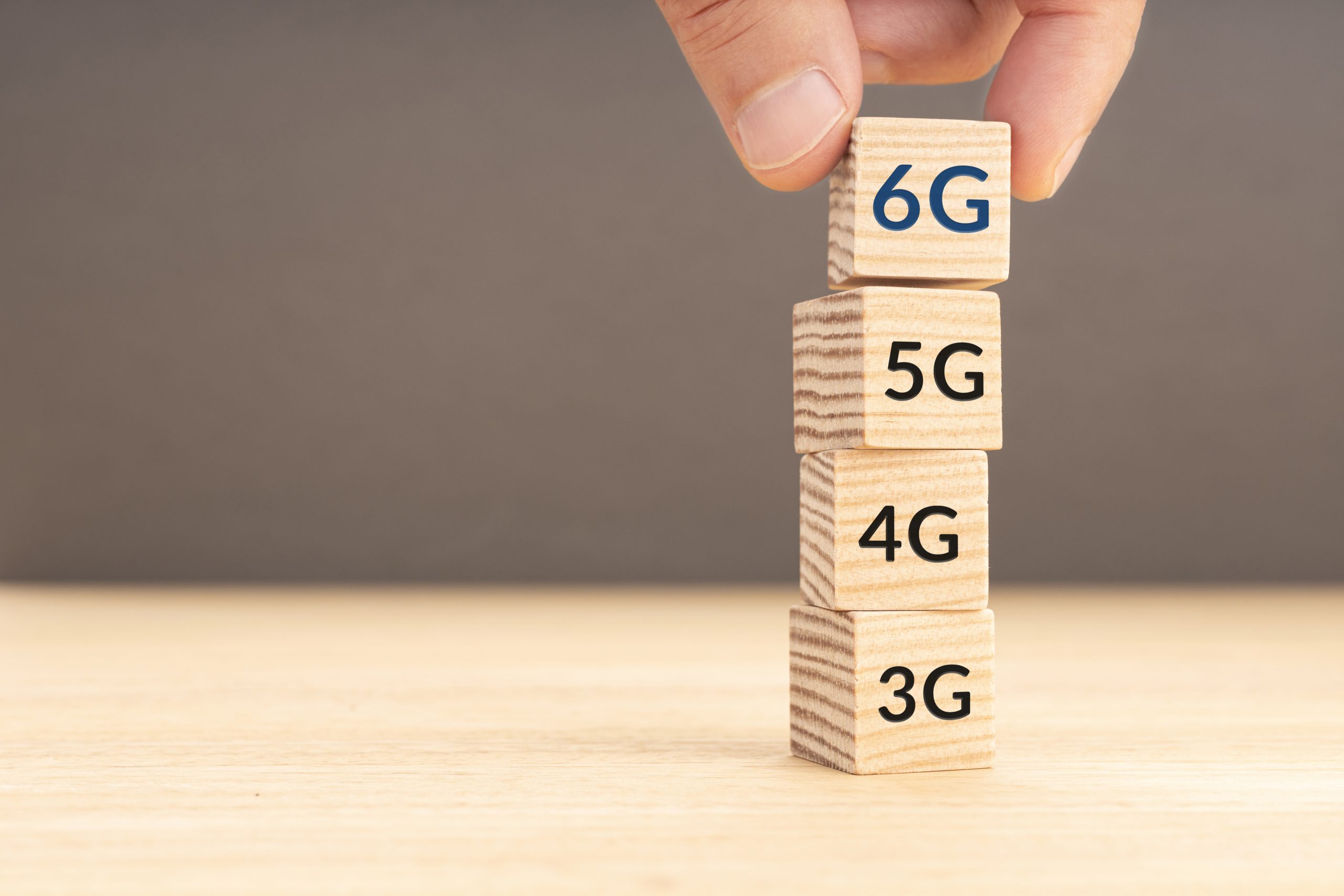
Wireless communcation is not as it originally was; it has developed progressively from 1G voice calls to 5G networks, which are very, very quick. With every generation, there has been a redefining of industries and consumer behavior with transformative capabilities, the discussion of 5G vs 6G future trends and the role of connectivity in innovation.
5G is concerned with speed, low latency, and massive device connections. Conversely, 6G is set to combine artificial intelligence, immersive technology, and ultra-high-frequency spectrum to provide close to one-second communication experiences.
Understanding 5G Technology
5G is the fifth generation of mobile networks, which is expected to be much faster, with lower latency and more reliability than 4G LTE. It allows real-time communication and enables the support of millions of connected devices in one square kilometer.
Key Features of 5G
- Speeds up to 10 Gbps
- 1 millisecond (ultra-low latency).
- Massive IoT connectivity
- Enhanced mobile broadband
- Network slicing capabilities.
5G powers smart cities, autonomous cars, remote surgery, and the newest game. It is the basis of digital transformation in industries.
What is 6G? The Next Leap
The sixth generation of wireless technology is known as 6G and is likely to be commercially introduced in 2030. Even though 6G is still in research phases, it can deliver radical features that are not just incremental.
In contrast to 5G, 6G will operate in the terahertz frequencies, and its speed will be 100 times higher than that of 5G. It will incorporate AI at the center of the network, allowing self-optimizing systems and real-time intelligent decision-making.
5G vs 6G Future Trends: Key Differences
In comparing 5G vs 6G future trends, it is obvious that the development trends are not only related to the increased speeds. The transition is a radical change in the operation and interaction of networks with users.
Major Differences
- Speed: 5G offers up to 10 Gbps; 6G may exceed 1 Tbps.
- Latency: 5G delivers 1 ms; 6G aims for microsecond latency.
- Frequency Bands: 5G uses sub-6 GHz and mmWave; 6G will use the terahertz spectrum.
- AI Integration: 5G supports AI applications; 6G will embed AI natively.
- Holographic Communication: Limited in 5G; fully supported in 6G.
These disparities show the extent to which connectivity will improve in the next ten years.
Speed, Latency, and Capacity Comparison
Speed and responsiveness characterize the user experience in the digital space. The 5G vs 6G future trends comparison depicts impressive advancements in the network performance and data handling.
5G will support 4K streaming and AR/VR applications. Nevertheless, 6G will be able to support immersive holographic communication and real-time digital twins without lag.
Projected Performance Metrics
- 5G Speed: Up to 10 Gbps
- 6G Speed: Up to 1 Tbps
- 5G Latency: ~1 millisecond
- 6G Latency: Less than 0.1 milliseconds
- Device Density: 10 million devices/km² (6G projection)
These developments will enable very complex digital ecosystems.
AI Integration and Smart Connectivity
Artificial intelligence is an important aspect of the next-generation networks. Although 5G enables AI-based applications, 6G will incorporate AI within the network core.
This implies that networks will automatically identify network blockage and performance optimization and anticipate failures before they happen. Intelligent automation is the future of 5G vs 6G future trends.
AI Capabilities in 6G
- Self-healing networks
- Anticipated bandwidth allocation.
- Self-governing infrastructure.
- Smart cybersecurity frameworks.
These capabilities will increase effectiveness and quality.
Industry Applications of 5G
5G has already started to revolutionize industries around the globe. Healthcare and manufacturing are experiencing their impact.
Major 5G Use Cases
- Smart cities and transportation management are among the major use cases of 5G.
- Autonomous vehicles
- Remote robotic surgeries
- Industrial IoT automation
- Cloud gaming and AR/VR
Businesses are also using 5G as a way of cutting their operational expenses and enhancing their productivity.
Expected Applications of 6G
The next wave of innovation will reinvent immersive technology. In the context of the comparison between 5G vs 6G future trends, the usage of 6G can be distinguished because of its futuristic nature.
Anticipated 6G Use Cases
- Holographic video calls
- Extended reality (XR) environments.
- Brain-computer interfaces
- Real-time digital twins
- The Internet is being integrated into space.
Such applications will be crossing the boundaries between the physical and digital.
Infrastructure and Spectrum Evolution
The infrastructure upgrades are essential in the transition from 5G to 6G. 5G demands urban small-cell networks and fiber backhaul development.
6G will require a yet higher antenna and integration with satellites. The analysis of the 5G vs 6G future trends indicates the enhancement of the use of terahertz communication and smart reflecting surfaces.
Global Development and Research Initiatives
Nations across the globe are putting a lot of money into 6G development.
Leading Contributors
- United States
- China
- South Korea
- Japan
- European Union
Samsung, Huawei, Nokia, and Ericsson are the technology giants in the process of developing prototypes of 6G.
These institutions are setting the pace of connectedness in the world.
Security and Privacy Considerations
There is also more security in cybersecurity with increased connectivity due to the introduction of 5G networks, which provide better encryption and network slicing security.
6G will have AI-based threat detection and quantum-protective cryptography. The comparison between 5G vs 6G future trends indicates that the future networks have to be more focused on privacy, resiliency, and data protection.
Challenges in Transitioning from 5G to 6G
The path to 6G does not run smoothly. Regulatory approvals, infrastructure expenses, and technical constraints may be a drag on deployment.
Key Challenges
- Huge spectrum allocation expenses.
- Power consumption issues
- Hardware compatibility
- Global standardization
- Issues with environmental impact.
International cooperation will be needed to address these challenges.
Economic and Business Impact
Economic opportunities in next-generation networks are enormous. 5G will add trillions of dollars to the world economy through the facilitation of digital services.
In terms of 5G vs 6G future trends, 6G might result in some completely new markets with immersive communication, AI ecosystems, and smart infrastructure in focus. Those businesses that adapt at an early stage will have competitive advantages.
What to Expect in the Next Decade
Within the decade, 5G is going to be fully mature and available to all parts of the world. Meanwhile, there will be a surge in 6G trials, leading to commercialization by 2030.
The debate about 5G vs 6G future trends will keep on changing as the researchers open up new opportunities. Businesses, programmers, and political leaders need to prepare for a more connected digital society.
Conclusion
The transition from 5G to 6G represents a significant milestone in technological advancement. Whereas 5G is transforming connections in the present time, 6G promises a future that involves artificial intelligence, immersive communication, and a blistering exchange of data.
The 5G vs 6G future trends will enable businesses, innovators, and consumers to be ready to face the next round of digital transformation. The future decade will bring a new era of the connected world of communication, work, and interaction with each other due to the acceleration of research and the growth of investments around the globe.
Explore the evolution of next-gen networks with Technogater’s 5G vs 6G overview. Learn how 5G delivers fast speeds, low latency, and IoT growth, while 6G promises ultra-high data rates, AI-native networks, and immersive experiences like holographic communication. This concise guide highlights key differences, future trends, and what businesses and users can expect as connectivity continues to advance toward a smarter, hyper-connected world.
Frequently Asked Questions
1. What are the main differences in 5G vs 6G future trends?
The primary dissimilarities of 5G and 6G tendencies of the future are speed, latency, integration of AI, and usage of spectrums. 6G will be much more intelligent and quicker than 5G.
2. When will 6G be available commercially?
According to the trend of 5G vs 6G future, 6G will become commercially available in the world by the year 2030, after a long time of research and testing.
3. How will 6G improve over 5G?
Regarding the future trends in 5G vs 6G, 6G will provide terahertz speed, microsecond response times, and embedded AI optimization that will offer smarter connectivity.
4. Will 6G replace 5G completely?
It is stated that 6G will be the successor of 5G but complementary to it in the future. As per 5G vs 6G future trends, both the networks will coexist in a transition period.
5. Why are 5G vs 6G future trends important for businesses?
The 5G vs 6G future trends are the reasons why businesses should be ready to face the new digital opportunities, enhanced automation, and further development of immersive technologies, which will make up the future markets.
