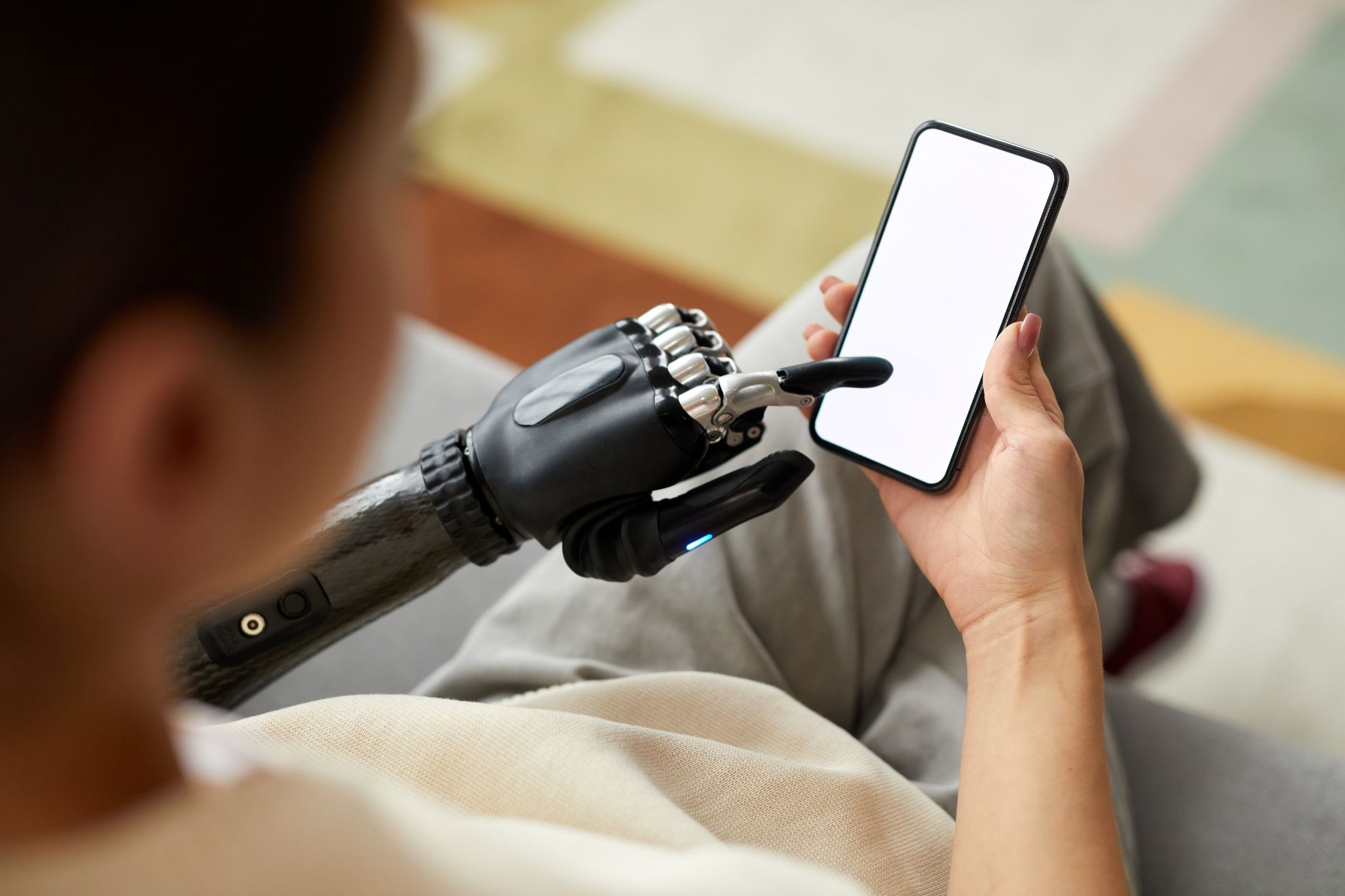
AI in mobile phones has essentially transformed the smartphone industry in the last 10 years. What was considered a futuristic innovation a few days ago is now a common amenity in nearly all flagship devices. Artificial intelligence has taken mobile technology to a new level, starting with intelligent photography, real-time voice translation, etc.
Smartphones are no longer mere communication devices. They are smart helpers that learn, evolve, and become more effective due to the user’s behavior. This change has been fueled by highly developed machine learning algorithms and high-powered neural processing units installed in modern chipsets.
With the further development of technology, AI is turning out to be the central force of faster performance, improved security, and more personalized experiences. This change for users and tech enthusiasts is a revolutionary era in tablet computing.
What Is AI in Mobile Phones?
AI in mobile phones can be described as the introduction of artificial intelligence, including machine learning, deep learning, and natural language processing, to smartphone systems. These technologies enable devices to process data, identify trends, and make decisions with a little human input.
Artificial intelligence systems get better as time progresses, as opposed to traditional programming. They are trained based on user interactions, application patterns, and conditions. This never-ending learning makes smartphones provide smarter suggestions and ideal performance.
Artificial intelligence is working in the background in things like camera additions, facial recognition, anticipatory text, and voice commands. AI is used by the majority of users on a daily basis without their knowledge.
The Evolution of Artificial Intelligence in Smartphones
The first years of smartphones only supported the simplistic automation features of AI. These capabilities were radically increased with time through hardware improvements, including neural engines and AI-specific processors.
Corporations such as Apple and Samsung started to implement AI-oriented chips into their gadgets. This change enabled smartphones to carry out sophisticated functions on the phone itself as opposed to obtaining cloud computing services only.
Innovation was further sped up with the introduction of new state-of-the-art AI chipsets such as Qualcomm Snapdragon and Apple A-series. These processors allowed recognition of images in real-time, improved the speed of applications, and increased energy efficiency.
Nowadays, the smartphone ecosystem is highly intertwined with AI, and it permeates the user interface of the security systems.
How AI in Mobile Phones Enhances Performance
Intelligent Resource Management
Intelligent allocation of resources is one of the largest benefits of AI in mobile phones. The AI algorithms handle user interaction with the applications and change the CPU, GPU, and memory consumption.
This implies that commonly used applications are loaded more quickly, whereas background applications use less energy. The outcome is a better multitasking process and performance in general.
Faster App Launch and Optimization
AI shows the next most likely apps to be opened, depending on the way an app is used. Smartphones preload these applications in the memory and, thereby, reduce the waiting time and improve user satisfaction.
Moreover, AI is an automatic system optimization tool that ensures the same speed even after months of use.
AI-Powered Smartphone Cameras
AI technology has transformed modern smartphone photography. Phones no longer use hardware alone, but they use the intelligence of the software to improve the image quality.
AI-driven cameras can automatically identify scenes.
- Control exposure and light in real time.
- Enhance photography in low-light conditions.
- Improve portrait mode and perfect edge detection.
- Use beauty filters in real time.
An example is the use of advanced computational photography in Google-made devices to create the effect of a DSLR. AI processes several images in a few milliseconds to provide clear and vivid images.
The effects of AI in mobile phones on photography have resulted in the availability of professional-quality images to the general population.

Smarter Voice Assistants and Natural Language Processing
With the development of AI, voice assistants are now more conversational and contextual. Natural language processing is critical in technologies such as Google Assistant and Siri in understanding the intent of the user.
These assistants can now:
- Set reminders and alarms
- Translating languages in real time.
- Control smart home devices
- Deliver information in real time.
- Follow-up response to questions of context.
Voice systems can identify accents and speech patterns, as well as emotional tones, with the help of AI. Consequently, the communication is more human, more instinctive.
AI in Mobile Phones for Security and Privacy
Another field that artificial intelligence has changed is security. The AI algorithms are used in facial recognition and in fingerprint scanning systems as a way of providing certainty of the authenticity.
AI-driven security features include:
- Depth mapping face unlock.
- Mobile banking fraud detection in mobile banking applications.
- App permission monitoring
- Real-time malware detection
As opposed to conventional methods of security, AI is flexible to changes in the appearance or behavior of the user. This ensures that devices are unlocked at a faster speed whilst still being very protective.
AI is applied to mobile phones to enable protection of digital security without undermining convenience.
Battery Optimization and Power Management
One of the biggest concerns for users of smartphones is the battery life. AI is important in maximizing the efficiency of power use and enhancing battery life.
Artificial intelligence compares the daily usage routine and modifies the background activity. Unused apps are limited, and necessary apps operate normally.
The major AI-based characteristics of the battery are
- Lumbar darkening control.
- Smart charging algorithms.
- App activity prediction
- Smart power-saving modes
AI makes sure that you use your device throughout the day by learning the way and time of day to maximize battery efficiency.
AI and Mobile Gaming Experience
With the integration of AI, mobile gaming has advanced in a lot of ways. Smartphones of the modern generation are able to track gaming activities and physically alter the performance settings.
The AI-enhanced gaming features are
- Stabilized real-time frame rate.
- Smart cooling controllers.
- Graphics optimization
- Faster response time during Internet gaming.
In-game experiences are also enhanced via AI through realistic character behavior and adaptive levels of difficulty. This increases the level of immersion and competition.
Personalized User Experience Through AI
The benefits of AI-based smartphones include personalization as one of the most powerful. Machines study browsing history, use of apps, and search activity in order to provide customized suggestions.
AI personalizes:
- News feeds
- Music suggestions
- Shopping recommendations
- App notifications
- Keyboard predictions
The more the AI gets to know about the habits of users, the more precise its predictions will be. This will provide a smooth digital interaction that matches the personal interests.
The increasing role of AI in mobile phones guarantees that the experiences of every user are not identical.
AI in Mobile Phones and 5G Connectivity
AI combined with 5G connectivity has powerful potential. AI is able to maximize network selection, enhance the quality of calls, and minimize latency during streaming.
AI can be used to run tasks in the cloud more efficiently with increased speed of data. This improves applications such as augmented reality, real-time translation, and live video processing.
With the world going 5G, smartphones with AI will provide even smarter and faster services.
Real-World Examples from Leading Brands
Multiple smartphone companies have utilized AI innovation as a source of their competitive advantage.
- There are neural engines in photography and Face ID security in Apple.
- Samsung incorporates AI into the camera and performance optimization.
- Google is interested in smart assistants and AI-based computational photography.
Such companies are still spending a lot of money on AI research to make their products stand out among others in the market.
Suggested Article: Top Future Technology Phones—What’s Next in Mobile Tech | Technogater
The Future of AI in Smartphones
The future of AI in mobile phones is bright and transformational. The recent advancements, such as generative AI, language translation in real time, and predictive health analysis, will become more mainstream.
Upcoming innovations may include:
- On-device AI chatbots
- Advanced AR experiences
- Emotion recognition systems.
- Artificial intelligence medical diagnosis.
- Wholly dynamic user interfaces.
The smartphones will have turned into mini AI hubs since the power and energy consumption of processors have become more efficient. This will decrease reliance on cloud processing and maximize privacy and speed.
AI is not an optional feature but is becoming the core of mobile innovation.
FAQs
1. What is AI in mobile phones?
The term AI in mobile phones refers to a technology that incorporates artificial intelligence devices that allow smartphones to learn user behavior, optimize performance, and automate activities so as to be more efficient.
2. How does AI in mobile phones improve camera quality?
The use of AI in mobile phones can help improve the photography experience by recognizing objects, correcting the light, and creating higher-quality pictures through fusing images to produce a better and sharper image.
3. Is AI in mobile phones safe for privacy?
The AI in the mobile phones enhances security by using facial recognition and behavioral analysis, but also leaves most of the data to be processed at the phone itself to ensure greater protection of privacy.
4. Does AI in mobile phones consume more battery?
In reality, AI in cell phones can be used to conserve battery by estimating the need to use apps, regulating the background functions, and smartly managing power daily.
5. What is the future of AI in mobile phones?
Generative AI tools, sophisticated health tracking, smarter assistants, and more personalization to create better user experiences are the future of AI in mobile phones.
Conclusion
The robotization of smartphones has turned them into smart digital assistants instead of mere communication devices. AI improves almost all features in modern mobile devices, such as photography and security, as well as battery management.
The emergence of AI in mobile phones signifies the transition in technology to be smarter, faster, and more customized. With the continued innovations, users will have more innovations in performance, automation, and connectivity.
In Technogater, we suppose that the future of mobile technologies is the smartphone with AI. To keep updated with these changes, you will be able to make more intelligent buying and technology choices in an ever-changing digitalized world.
