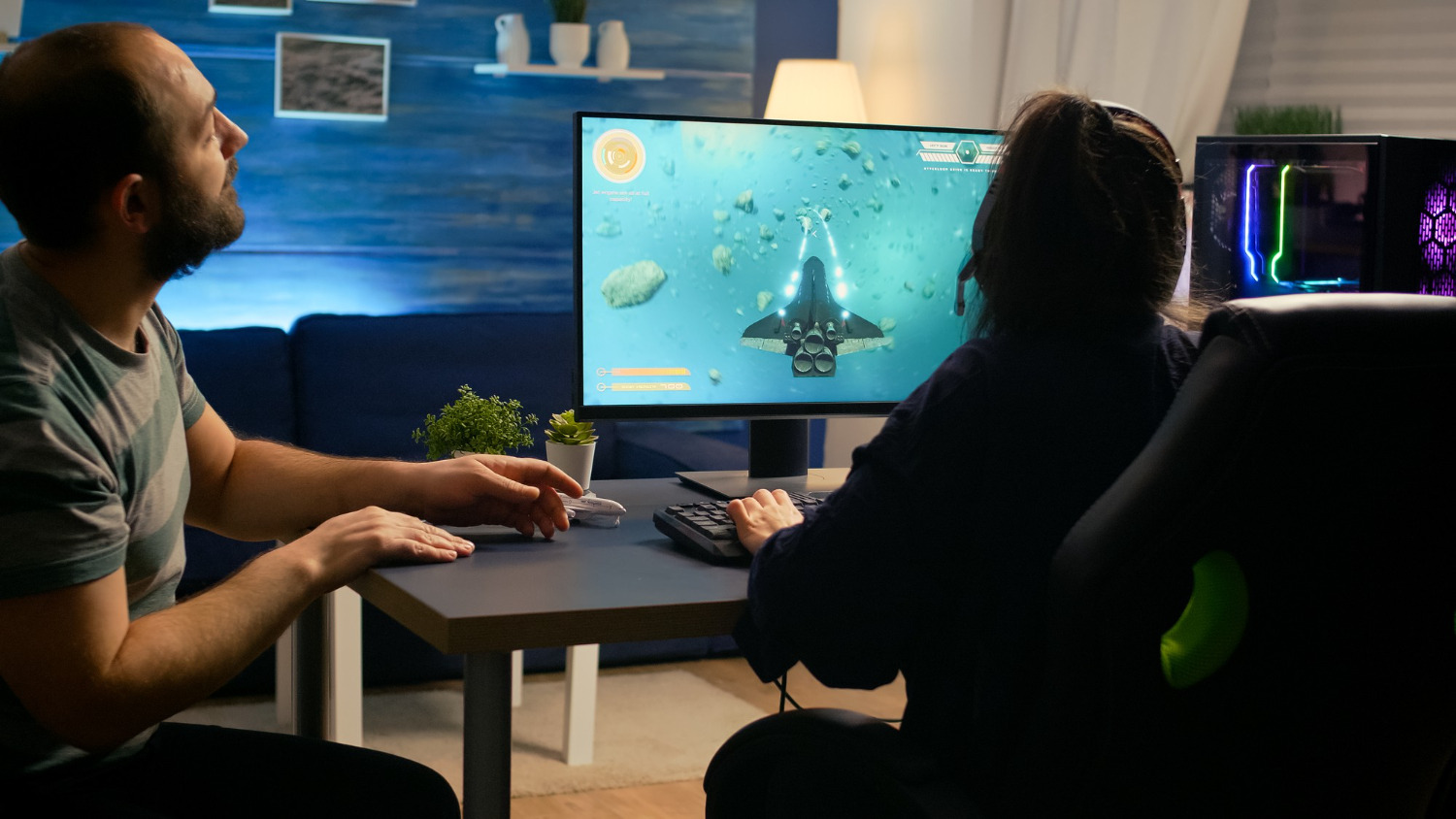
One of the most significant choices for contemporary gamers is deciding between a gaming desktop vs gaming laptop. Both are potent platforms for the gaming experience, but they address quite different needs. The factors considered in this decision are performance, price, portability, and long-term value.
We are trying to deconstruct complex technology decisions at Technogater in a practical, straightforward way. This comprehensive list will help you identify the gaming system that best suits your lifestyle, finances, and performance goals.
Understanding Modern Gaming Systems
Gaming hardware has changed rapidly over the last decade. The current systems are capable of ultra-high resolutions, real-time ray tracing, and difficult titles in multiplayer. The way power is provided, however, differs greatly between desktops and laptops.
A gaming desktop is oriented toward customization and performance. A gaming laptop is more concerned with miniature design and portability. These reasons will help make the gaming desktop vs gaming laptop debate easier to follow up.
Gaming Desktop vs Gaming Laptop: Core Differences
Hardware Design Philosophy
The primary distinction lies in the physical design. Desktops have full-sized parts with fewer thermal limitations. Laptops are based on small and power-saving hardware.
Key distinctions include:
- Size and form factor
- Cooling systems
- Power delivery
- Component accessibility
These do have a direct influence on the performance and sustainability of gaming.
Component Power Limits
Desktop GPUs and CPUs consume more power. The components of the laptops are designed to be efficient, not to be maximum. This disparity determines the difference in the demands placed on games in the real world.
Performance Comparison: Power, Cooling, and Longevity
Raw Processing Power
In a gaming desktop vs gaming laptop matchup, desktops will nearly always be the winner in brute-force performance. Desktop CPUs are faster, with higher clock speeds and lower prices, and are multi-core.
This advantage can be seen in:
- CPU-intensive games
- Open-world titles
- Strategy games Simulation.
Thermal Performance
Cooling is one of the most important factors for sustained gaming performance. Desktops use large air coolers or liquid-cooling systems. Compact fans and heat pipes are used in laptops.
Better cooling means:
- Stable frame rates
- Less thermal throttling
- Longer component lifespan
Long Gaming Sessions
Desktops are more consistent in performance during extended gaming sessions. To cool down laptops, the speed can be reduced to manage heat.
Graphics and Gaming Experience
GPU Performance Differences
Desktop graphics cards are much more potent than they used to be. Some GPUs of the same name can even give different results.
Desktop GPUs are superior to gaming laptops in the following ways:
- Higher frame rates
- Improved ray tracing capabilities.
- Improved texture handling
Resolution and Display Options
Gaming desktops are compatible with dual or wide screens. The laptops have built-in screens, usually 15 to 17 inches.
Desktop advantages include:
- 144Hz to 240Hz monitors
- 4K and ultra-wide support
- Custom color calibration

Portability and Lifestyle Considerations
Mobility and Convenience
Gaming laptops are superior in portability. It does not require external hardware to play games anywhere. This is flexible for students, travelers, and professionals.
Laptops offer:
- All-in-one design
- Built-in battery
- Easy transport
Desk Setup Requirements
Desktops need their own space and peripherals. Although they are not very portable, they offer a more immersive, ergonomic experience. In everyday life, it is all about your routine when choosing between a gaming desktop vs gaming laptop.
Pricing Breakdown and Long-Term Value
Initial Purchase Cost
Gaming laptops will be more expensive at the initial stages. Small-sized engineering and built-in displays increase production costs.
Desktops generally offer:
- Improved performance on a dollar.
- Flexible budget scaling
- Easier entry-level options
Cost Over Time
Desktops are preferable for long-term value. The indivisible components may be substituted rather than purchasing a complete system.
Savings come from:
- Upgrading parts gradually
- Recycling monitors and peripherals.
- Longer system lifespan
Upgradeability and Future-Proofing
Component Replacement
The gaming desktop vs gaming laptop debate is a big issue when it comes to upgradeability. Upgrades to the full components are feasible in desktops.
Desktop upgrade options include:
- GPU replacement
- CPU upgrades
- RAM and storage expansion
Laptops have limited upgrade options, typically limited to memory and storage.
Keeping Up with New Games
Desktops change more readily as the games become harder. Such flexibility allows one to preserve performance without a complete replacement.
Power Consumption and Heat Management
Energy Efficiency
The use of efficiency-driven components makes gaming laptops less powerful. This can lower electricity costs. Desktops, however, combine increased power consumption with improved performance and cooling efficiency.
Noise Levels
Desktops tend to run at lower noise levels when loaded, thanks to larger cooling solutions. The laptops can get loud when played at high volume. Noise is also essential with the shared and streaming arrangements.
Use Cases: Who Should Choose What?
Choose a Gaming Desktop If:
- You desire the best performance.
- You plan to upgrade over time.
- You are a fan of a dedicated gaming system.
- You appreciate the long-run economies.
Choose a Gaming Laptop If:
- You need portability
- You have limited space
- You travel frequently
- You desire the one-stop solution.
The gaming desktop vs gaming laptop choice becomes even clearer in light of real needs.

FAQs
1. Is the gaming desktop vs gaming laptop performance very different?
Yes. The differences between gaming desktops and gaming laptops are that desktops tend to have higher frame rates and stronger cooling to withstand prolonged gaming.
2. Which is more cost-effective: a gaming desktop or a gaming laptop?
Comparing the cost of gaming desktops vs. gaming laptops indicates that desktops are more cost-effective in the long run, as they can be upgraded more easily and replaced at a lower cost.
3. Can a gaming laptop replace a desktop?
In some cases, yes. Nevertheless, gaming desktop vs gaming laptop comparisons reveal that desktops still lead in long-term performance.
4. Which is better for competitive gaming?
Competitive players tend to prefer desktops—latency, cooling, and refresh rate favor desktops in gaming, as well as in desktops and gaming laptops.
5. What should beginners choose: gaming desktop vs gaming laptop?
Novices are supposed to make decisions depending on their lifestyle. Decision-making for gaming desktops vs gaming laptops is based on space, travel requirements, and financial constraints.
Conclusion
No one can be said to be a universal winner in the debate over desktop vs. laptop gaming. Both options have a specific audience. Gaming desktops provide unrivaled performance, upgradeability, and durability. Gaming laptops are convenient, portable, and modern in design. The most appropriate option depends on how, where, and how often you play.
In Technogate, the first thing is to assess your lifestyle. Performance and usability are so important.
